
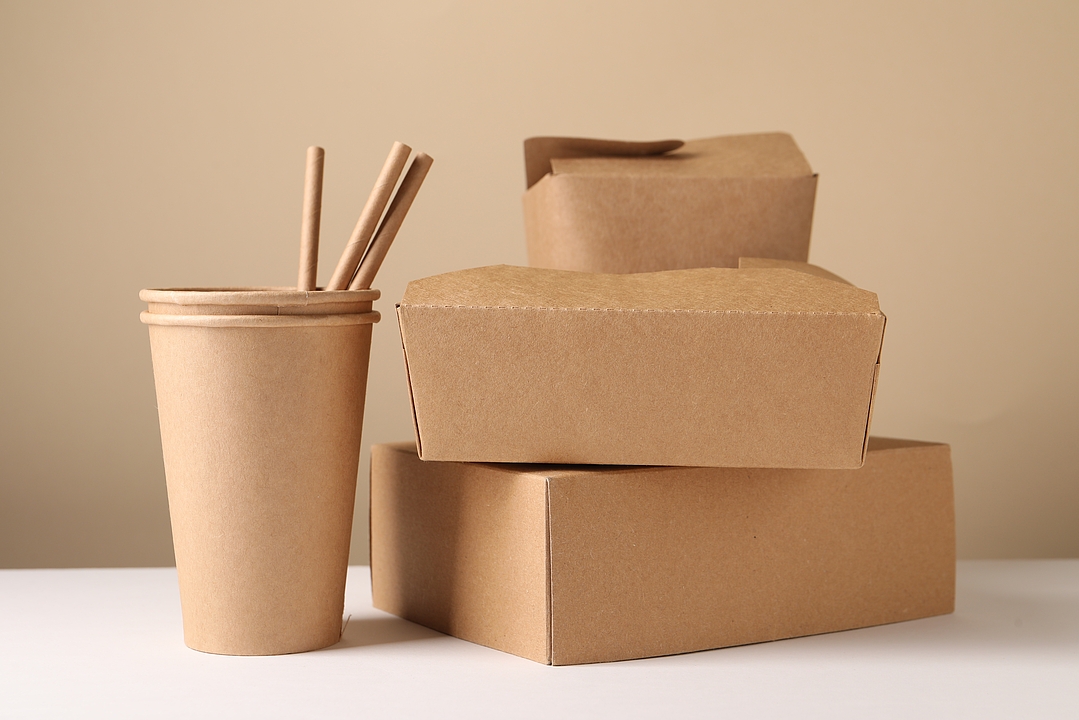
Cardboard / Paper
FSC
FSC stands for Forest Stewardship Council. FSC is widely recognized as a solution for sustainable forest management, based on globally applicable standards, the involvement of relevant stakeholders, and the support of leading businesses as well as respected environmental and social organizations. Certification is awarded by independent third-party certification bodies and verified through annual audits.
For more information, please visit: www.fsc-deutschland.de

PEFC
The Programme for the Endorsement of Forest Certification (PEFC) is a certification system for sustainable forest management based on internationally agreed criteria and indicators developed through the follow-up processes of the 1992 Rio Earth Summit.
PEFC's primary goal is to promote, document, and continuously improve sustainable forest management in line with economic, environmental, and social standards. For more information, please visit: www.pefc.de
Blauer Engel
The Blue Angel is the official environmental label of the German federal government and has been guiding consumers for more than 45 years. It identifies products and services that meet high environmental standards. The label can be found on many everyday products, including paints, furniture, detergents, and recycled paper.
Transparency and Independence
The Blue Angel is a voluntary, impartial, and independent certification scheme. Its credibility is ensured through the involvement of the German Federal Ministry for the Environment, the German Environment Agency, the Environmental Label Jury, and RAL gGmbH as the independent certification body.
The label provides consumers and public institutions with reliable guidance when selecting environmentally preferable products. By supporting informed purchasing decisions, it encourages environmentally friendly innovation and helps reduce environmental impacts. The Blue Angel is recognized for its independent, transparent, and rigorous certification standards.
For more information, please visit: www.blauer-engel.de/de
Measures
There is currently a three-element basic strategy for dealing with packaging: first and foremost, it is important to reduce the amount of resources used to produce packaging, for example by using reusable packaging or reducing the amount of material used. If the use of reusable packaging or the reduction of packaging is not possible, recycling is used in the second step - e.g. by using recycled materials or improving the recyclability of the packaging used. If, for example, the nature of the product does not permit this either, the third principle in the area of wood - certification - is supported. In the area of plastics, additional packaging is already being eliminated.
Medium term
The objective is therefore to reduce packaging materials wherever possible and practical and to optimise packaging or switch to innovative, sustainable packaging. For essential packaging, certification according to FSC, PEFC or with the Blue Angel label is aimed at. We currently consider these three certifications to be equivalent. Work is currently taking place on special projects to reduce and optimise packaging. Care is always taken to ensure that transport safety is not compromised in any way. The constant level of transport safety ensures that food waste resulting from a lack of transport safety is minimised.
Current examples and planned projects illustrate our commitment to sustainable conduct and business practices when it comes to packaging: certain packaging reduction and optimisation measures include the introduction of reusable lids for 500 g yoghurt pots, the switch to multi-component pots, the elimination of additional paper warps and the application of separation information to products (but only where appropriate, i.e. when there are at least two material fractions in the item). Furthermore, in the medium term, alternatives to aluminium blanks that are already prevalent in the white line (milk and dairy products) must be examined and, if necessary, launched. A voluntary commitment to use certified material only when using virgin fibres in sales packaging is being examined.
Long term
The long-term objective is to replace traditional plastic packaging with plastics made from rapidly renewable raw materials.
In the long term, we are committed to implementing further projects relating to ZHG's three-element strategy for handling packaging. Product quality must be maintained in every respect. The definition of recycling rates and their verifiability is also currently being examined.